

Plastic Pallet 1200×800 mm Lightweight Pallet – Nestable Pallet – Ultra-Lightweight Export Pallet 10015U
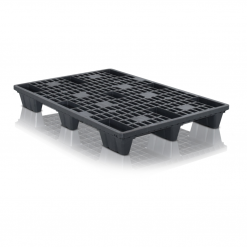
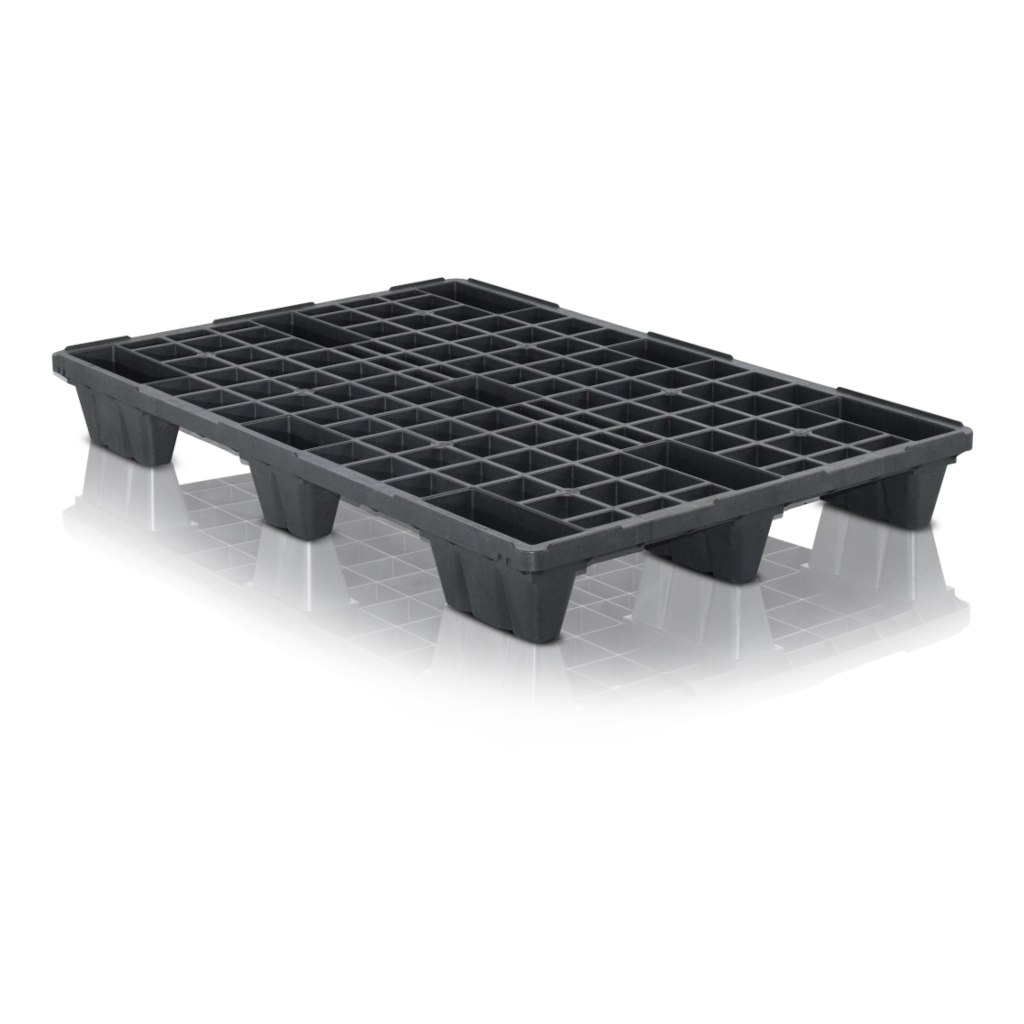
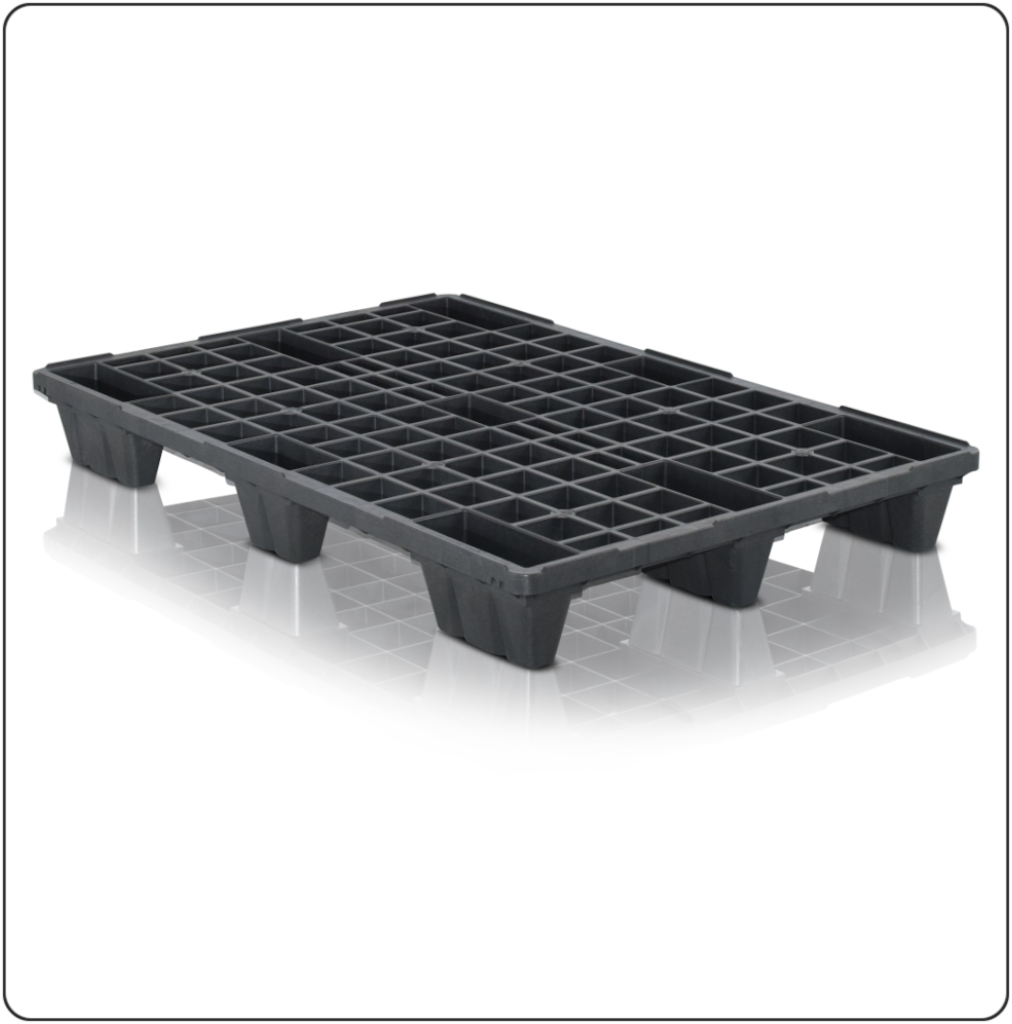
The 1200×800 mm plastic pallet 10015U is an exceptionally lightweight, nestable one-way and export pallet in the European standard format. With a tare weight of just 4.6 kg, it consistently reduces the load carrier’s share of the total shipping weight. At the same time, it provides a static load capacity of 2,500 kg and a dynamic load capacity of 1,000 kg. This makes the pallet suitable for companies that ship packaged goods internationally, handle high volumes and carefully assess every kilogram of packaging weight in air freight, sea freight or cross-border distribution.
The 1200×800 mm plastic pallet 10015U is an exceptionally lightweight, nestable one-way and export pallet in the European standard format. With a tare weight of just 4.6 kg, it consistently reduces the load carrier’s share of the total shipping weight. At the same time, it provides a static load capacity of 2,500 kg and a dynamic load capacity of 1,000 kg. This makes the pallet suitable for companies that ship packaged goods internationally, handle high volumes and carefully assess every kilogram of packaging weight in air freight, sea freight or cross-border distribution.
Technical Data for the 10015U Plastic Pallet
- Product: Plastic Pallet 1200×800 mm Lightweight Pallet – Nestable Pallet – Export Pallet – 10015U
- Item-No.: 10015U
- Dimensions: 1200 x 800 x 140 mm
- Gewicht: 4,6 kg
- Static load capacity: 2,500 kg
- Dynamic load capacity: 1,000 kg
- Racking load capacity: not specified
- Base: 3 runner
- Colour: black
- Material: Polyethylene (PE)
- Manufacturing: injection moulding
- Version: nestable, optionally available without a rim
The specified load capacity ratings apply to different load conditions and must not be treated as interchangeable. When selecting the pallet for a practical application, factors such as load distribution, point loads, centre of gravity, packaging stability, temperature, storage duration, support conditions, pallet condition, transport route and the material handling equipment used must be considered in addition to the total weight. For critical applications, the complete unit load should always be assessed.
Positioning as an Ultra-Lightweight One-Way and Export Pallet
The term one-way pallet primarily describes the intended logistics process. The 10015U Plastic Pallet 1200×800 mm Lightweight Pallet is particularly relevant for shipping chains in which return transport is not planned, cannot be reliably organised or is not economically viable. This does not automatically mean that the pallet must be disposed of after a single use. If it remains undamaged, clean and suitable for the next load, reuse may be considered. However, no reliable fixed number of possible reuse cycles can be stated, as this depends on the goods carried, handling frequency, temperature, travel routes and handling conditions.
As an export pallet, the 1200×800 mm lightweight plastic pallet – nestable pallet offers two key economic advantages: a very low tare weight and a space-saving nestable design. Its low weight reduces the overall mass of the packaging unit. Nestability reduces the space required for empty pallets before use, during internal staging and for potential return transport. Particularly at high volumes, both factors can affect storage space requirements, internal transport movements and freight costs.
By contrast, the 10015U is not a designated racking pallet. As no racking load capacity is specified, the static load capacity of 2,500 kg must not be applied to storage on two racking beams. For high-bay racking, long-term storage with an unsupported span or processes involving high continuous loads, a pallet with a confirmed racking load capacity should be selected or the specific application should be technically approved.
What the Static and Dynamic Load Capacities Mean
Static load capacity: 2,500 kg
The static load capacity applies when the pallet is stationary on a sufficiently level, stable and load-bearing surface. Typical situations include floor storage, block stacking, shipping staging and stationary buffer locations. The specified capacity of 2,500 kg requires a suitable load that is distributed as evenly as possible across the deck surface.
Narrow machine feet, metal edges, individual heavy components, rolls, drums or containers with small contact areas can create high point loads. As a result, the pallet may be subjected to significantly greater local stress than the total weight alone would suggest. In such cases, suitably dimensioned solid plastic sheets made of PE or PP, or appropriate pallet supports, can increase the contact area. However, a load distribution plate does not automatically increase the pallet’s approved load capacity. The material, thickness, dimensions and securing method must be matched to the specific load profile.
Dynamic load capacity: 1,000 kg
The dynamic load capacity describes the load applied while the pallet is being moved using suitable material handling equipment. Additional forces act on both the pallet and the load during lifting, acceleration, braking, cornering, travelling over thresholds and setting down. The dynamic load capacity is therefore lower than the static load capacity.
For practical use, the maximum load weight of 1,000 kg is not the only relevant factor. Stacking height, centre of gravity, packaging strength, fork position, travel speed, floor conditions and transport distance also affect the level of stress. Tall unit loads or loads with a high centre of gravity can be more demanding even at a lower total weight than a low, evenly distributed load. The pallet must therefore always be assessed as part of the complete unit load.
No Racking Load Capacity Specified
No racking load capacity is specified for the 10015U. It should therefore not be selected for storage on racking beams solely on the basis of its static or dynamic load capacity. In a racking system, the pallet is subjected to bending between the support points. Deflection, temperature and storage duration can further affect its load-bearing capacity. Where the process requires confirmed suitability for racking, alternatives such as the 10361, 10367, 10369 or 10039 pallets compared below should be considered.
Ultra-Low Tare Weight and Its Impact on Freight Costs
At just 4.6 kg, the 10015U is one of the lightest Euro-format pallets in the Plastic Union range. This advantage becomes particularly significant when large numbers of pallets are used per shipment or when freight charges depend heavily on the actual weight. For example, replacing a 20 kg load carrier reduces the packaging weight by a calculated 15.4 kg per pallet. Across 26 pallets, this results in a weight difference of approximately 400 kg. Compared with a 25 kg pallet, the calculated difference is 20.4 kg per pallet, or around 530 kg across 26 units.
These examples illustrate only the effect of the weight difference. They do not constitute a general loading guideline for lorries, containers or aircraft. The actual cost-effectiveness depends on the type of freight, applicable tariff, volumetric weight, number of unit loads, value of the goods, handling risk and the securing measures required. The most economical pallet is not automatically the lightest one, but the lightest version that can reliably meet the technical requirements of the actual process.
10016 plastic pallet
Nestable Design for Empty Pallet Storage and Staging
Nestable means that empty pallets can be partially nested inside one another in the intended configuration. This creates a more compact empty pallet stack than pallets that can only be stacked rigidly on top of one another. The benefit is already apparent before shipping: more empty pallets can be stored within a limited floor area and moved to packing stations with fewer internal transport movements.
Nestability can also reduce the cargo space required for potential return transport. For detailed planning, the nesting height, number of pallets per stack, permitted stacking height and required staging quantity should be confirmed. Tall stacks of empty pallets must be positioned on a level surface and protected against impact, slipping or tipping. Damaged or deformed pallets should not be incorporated into a stable empty pallet stack and should instead be removed from the process.
The external dimensions of 1200 x 800 mm make it easier to integrate the pallet into many existing packing stations. However, they do not automatically guarantee compatibility with pallet magazines, roller conveyors, chain conveyors, lifting tables or automated transfer stations. Sensors, runner spacing, support surfaces, entry height and tolerances must be checked against the equipment actually in use before approval for series production.
Material, Manufacturing and Performance in Day-to-Day Logistics
The 10015U plastic pallet is manufactured from polyethylene using the injection moulding process. This process enables reproducible contours and consistent basic geometry across the product range. Unlike damaged wooden pallets, it does not produce wood splinters, loose nails or protruding metal parts. Plastic does not absorb moisture in the same way as wood and therefore does not swell.
The pallet is black and, according to the product description, UV-stabilised. UV stabilisation can delay material ageing caused by exposure to light, but it does not replace proper storage. Prolonged exposure to sunlight, extreme temperatures, aggressive chemicals, repeated impacts and overloading can affect the pallet’s service life. Before each subsequent use, the deck, runners, edges and handling points should be inspected for cracks, deformation or other visible damage.
The chemical resistance of polyethylene depends on the specific substance, its concentration, temperature and exposure time. An application-specific assessment is therefore required for chemicals, hazardous substances or specialised cleaning agents. When used with liquid hazardous substances, the pallet does not replace either approved packaging or a required containment system.
Handling with Forklifts and Pallet Trucks
The nine feet form the pallet’s base structure. For transport, the fork tines must be inserted sufficiently far beneath the pallet, centred and parallel. Lifting from one side, using only partially inserted tines, engaging the pallet at an angle or striking it with the fork tips can cause localised damage. Travel speed must be adapted to the load height, centre of gravity, floor conditions, visibility and transport route.
Whether a particular pallet truck can be used depends on the entry height, wheel position, fork length and specific runner configuration. Before use in a series-production process, a practical test with the actual equipment is recommended. The same applies to conveyor systems, pallet magazines and automated packaging lines. An ultra-lightweight pallet can be highly efficient in the right process, but it is more sensitive to unsuitable support points and severe impact loads than a pallet designed for heavy-duty or high-bay racking applications.
Load Securing: Considering the Pallet, Goods and Vehicle as a Complete System
The plastic pallet forms the base of a unit load but does not replace professional load securing. Packaging, centre of gravity, friction values, stacking height, form-fit securing, lashing equipment, vehicle structure and transport route must be assessed together. The VDI 2700 series of guidelines on load securing on road vehicles provides technical principles and application-specific guidance. The relevant part depends on the vehicle, the goods being transported and the securing method used.
BG Verkehr provides information on load distribution and load securing, including guidance on form-fit securing, lashing equipment, anti-slip materials, wedges and other aids. In addition, the Federal Office for Logistics and Mobility refers to Section 22 of the German Road Traffic Regulations (StVO) and further specialist information on load securing. These sources do not replace a specific securing calculation, risk assessment or approval of the individual unit load.
Suitable Accessories for the 1200×800 mm Lightweight Plastic Pallet – Nestable Pallet
Accessories should not be selected as a standard solution, but should be determined on the basis of the goods geometry, load profile, transport method and load-securing concept. For the 10015U, the following solutions may be particularly suitable:
- Plastic layer pads and separator sheets: Pallet layer pads in the 1200×800 mm format can separate layers of goods, protect sensitive packaging and improve the contact area. They do not automatically increase the pallet’s load capacity and must be secured against slipping.
- Anti-slip layer pads: Anti-slip plastic layer pads can influence friction within the unit load when used with smooth cartons, containers or packaged goods. The actual friction values and their integration into the load-securing concept must be assessed for the specific application.
- Load distribution and protective plates: Custom-made solid PE or PP plastic sheets can be used as pallet supports, separator layers or product protection where contact areas are small. The thickness and profile must be matched to the load.
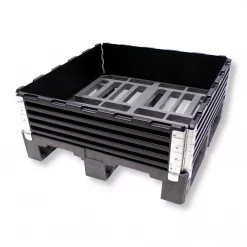
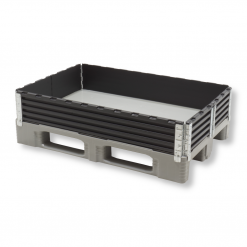
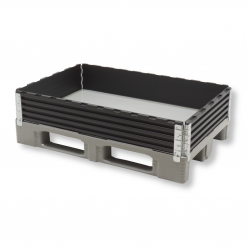
- Pallet collars: A plastic pallet 1200×800 mm collar can provide lateral protection and a defined container height. Before combining it with the ultra-lightweight 10015U, the rim geometry, support conditions, total weight, stacking configuration and dynamic loads must be assessed.
- Wedges and storage V-blocks for cylindrical goods: For rolls, pipes, shafts or drums, pallet wedges for load securing or plastic V-blocks can provide a defined support surface. Compatibility with the pallet deck, the resulting point loads and the additional securing required to prevent rolling must be technically assessed.
The pallet’s optional rim can help position compatible packaging. However, it does not provide independent load securing against slipping, tipping or lifting. Stretch film or strapping is also not sufficient for every transport situation. The decisive factor is whether the complete unit load can withstand the forces expected during transport.
Industries and Users: Who Uses the 10015U and How?
Export Logistics, Freight Forwarding and Packaging Service Providers
Freight forwarders, export departments and packaging service providers use lightweight plastic pallets when the load carrier remains at the destination or reliable return transport cannot be arranged. The 10015U provides a lightweight base for dimensionally stable packaged industrial goods up to the confirmed dynamic load capacity. Its advantages include its low tare weight, Euro-format dimensions and the fact that the plastic pallet itself does not require treatment applicable to raw wood packaging material.
Air Freight and Time-Critical Spare Parts Logistics
In air freight, express shipping and international spare parts logistics, every kilogram of packaging weight can affect costs. The 1200×800 mm lightweight plastic pallet – nestable pallet is used here as a base load carrier for cartons, crates, containers or packaged assemblies. Airlines and ground handling providers may apply their own requirements regarding load profile, overhang, securing and acceptance. The complete unit load must therefore be agreed with the logistics partner in advance.
Sea Freight and Container Logistics
In sea freight supply chains, plastic’s resistance to moisture is a practical advantage. Unlike wood, the pallet does not swell and does not itself require ISPM 15 treatment for wood packaging material. However, it does not automatically protect the goods against condensation, corrosion or movement inside the container. Stowage, climate protection, void spaces and securing therefore remain integral parts of the packaging concept.
Mechanical Engineering and Industrial Supply
Mechanical engineering companies and industrial suppliers can use the Plastic Pallet 1200×800 mm Lightweight Pallet – nestable pallet for packaged spare parts, fittings, plastic components, lightweight assemblies and similar goods. Metal parts with small contact areas or sharp edges must not be placed unprotected on the deck. In such cases, load distribution plates, layer pads or a different pallet should be considered. For heavy machine feet, high point loads or long-term racking applications, a more robust pallet with runners or a semi-hygienic pallet is often the more suitable choice.
Automotive and International Series Supply
Automotive suppliers use lightweight export pallets for spare parts, cartoned goods, plastic containers or supply flows where return transport is not planned. For recurring in-plant circulation processes, a more robust reusable pallet may be more economical. Conveyor systems, small load carrier arrangement, scanners, label positions and the stacking pattern should be tested under practical conditions before series production begins.
Electrical Engineering, Electronics and Technical Equipment
For packaged electrical components, devices and assemblies, the 10015U provides a splinter-free, moisture-resistant base. Sensitive products also require suitable cushioning, moisture protection and, where necessary, ESD protection. Polyethylene as a material does not automatically provide ESD suitability. Electronic goods should therefore only be shipped using a packaging system approved for this purpose.
Retail, E-Commerce and Fulfilment
Distribution and fulfilment centres can use the pallet for consolidated carton shipments, promotional goods or cross-border deliveries. Nestable stacks of empty pallets save space in the shipping area. Key requirements include load-bearing cartons, a uniform stacking pattern, limited overhang and a securing solution that takes account of the frequent handling operations in parcel, groupage and hub-and-spoke networks.
Food, Beverages and Packaged Consumer Goods
The pallet can be considered for packaged food products, beverage cartons, cans, bottles in outer packaging or dry packaging materials. However, it is not a designated hygienic pallet. The product data does not provide general approval for direct contact with unpackaged food. For stricter hygiene and cleaning requirements, the 10039 hygienic pallet is the more suitable comparison option.
Chemicals, Cosmetics and Tightly Sealed Containers
For tightly sealed and adequately packaged products, the pallet can provide a lightweight base for export shipments. Chemical resistance, leakage risk and dangerous goods classification must be assessed for the specific product. The pallet does not replace any required containment systems, labelling or approved dangerous goods packaging.
Roll, Pipe and Long-Goods Logistics
Cylindrical goods must not be placed unsecured on a pallet. Suitable wedges or plastic V-blocks can provide defined support for smaller rolls, pipe sections or shafts. Point loads, the attachment of the securing aids and protection against rolling must be assessed. For heavy coils or large pipe bundles, a specially designed coil pallet, drum pallet or custom pallet is generally the more suitable solution.
Export Without ISPM 15 Treatment of the Plastic Pallet
ISPM 15 of the International Plant Protection Convention regulates phytosanitary measures for relevant raw wood packaging material used in international trade. A pallet made entirely of plastic is not subject to the treatments and marking requirements prescribed for this type of raw wood packaging material. The plastic pallet itself therefore does not require ISPM 15 heat treatment or fumigation.
This does not constitute general export approval for every type of goods or destination country. The relevant product requirements, customs regulations, dangerous goods classification, packaging, import regulations and the requirements of customers, airlines, shipping companies or logistics service providers continue to apply. If wooden crates, raw wood battens, dunnage or other relevant wooden components are added, these must be assessed separately.
Comparison Within the 1200×800 mm Pallet Range
| Item | Weight | Static | Dynamic | Rack | Typical Positioning |
|---|---|---|---|---|---|
| 10015U | 4.6 kg | 2,500 kg | 1,000 kg | Not specified | Ultra-lightweight, nestable one-way and export pallet |
| 10016 | 5.8 kg | 2,500 kg | 1,200 kg | Not specified | Lightweight nestable pallet with a higher dynamic load capacity |
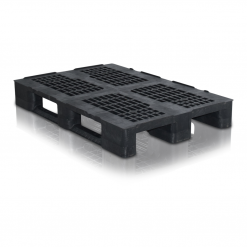
| 10361 | 11.4 kg | 5,000 kg | 1,250 kg | 450 kg | Lightweight pallet with runners for reusable storage and transport applications |
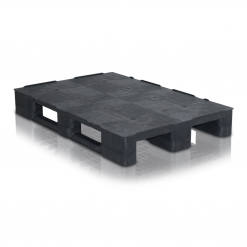
| 10367 | 17 kg | 7,500 kg | 1,750 kg | 1,000 kg | Robust semi-hygienic pallet with an open Top deck |
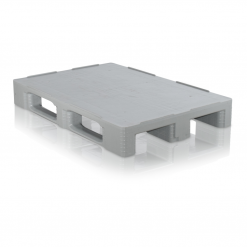
| 10369 | 18 kg | 7,500 kg | 1,750 kg | 1,000 kg | Robust semi-hygienic pallet with an closed Top deck |
| 10039 | 18 kg | 7,500 kg | 1,250 kg | 1,000 kg | Fully hygienic pallet with a closed deck for sensitive environments |
The 10015U is the appropriate starting option when the lowest possible tare weight, nestability and one-way export applications are the main priorities and a dynamic load capacity of 1,000 kg is sufficient. With the same external dimensions and static load capacity, the 10016 provides an additional 200 kg of dynamic load capacity. The 10361 is suitable for recurring storage and transport processes and has a specified racking load capacity. The 10367 and 10369 are considerably heavier but offer higher dynamic and racking load capacities. The 10039 is designed for more stringent hygiene and cleanliness requirements.
Decision Support for Procurement and Logistics Planning
The 10015U is particularly well suited when the following requirements apply:
- Euro format 1200 x 800 mm
- The lowest possible packaging weight
- One-way export process or an export process without a reliable return arrangement
- Maximum dynamic load of 1,000 kg under suitable conditions
- No confirmed racking load capacity required
- Space-saving storage of empty pallets through nestability
- Dimensionally stable packaged goods with suitable load distribution
A different pallet should be considered when racking, high point loads, heavy machinery components, intensive reusable cycles, closed deck surfaces or specific hygiene requirements are the main priorities.
Key Information for Quotation and Technical Assessment
For a reliable selection, the enquiry should include item number 10015U, required quantity, delivery location, load weight, dimensions of the goods, centre of gravity, point loads, type of packaging, means of transport, destination countries, forklifts or pallet trucks used, conveyor equipment, required nesting or stacking height and any accessories needed. For rolls, drums or long goods, the diameter, length, support points and required method of securing are also important. When pallet collars are used, the rim, support geometry and total load of the complete unit load must be assessed.
Frequently Asked Questions About the 1200×800 mm Lightweight Plastic Pallet – Nestable Pallet
What Is the Load Capacity of the 10015U Plastic Pallet?
The static load capacity is 2,500 kg. The dynamic load capacity is 1,000 kg. Both values require suitable load distribution, appropriate support conditions and an undamaged pallet. No racking load capacity is specified.
Is the 10015U Suitable for Pallet Racking?
General suitability for racking has not been confirmed. Without a specified racking load capacity, the static load capacity must not be applied to storage on two racking beams. For racking applications, technical approval or a pallet with a specified racking load capacity is required.
What Does Nestable Mean?
Nestable means that empty pallets can be partially nested inside one another in the intended configuration. This reduces the height of the empty pallet stack. The specific nesting height and permitted number of pallets per stack should be confirmed for the version ordered.
Does the Plastic Pallet Require ISPM 15 Treatment?
No, the pallet itself is made entirely of plastic and does not require ISPM 15 treatment for raw wood packaging material. If the complete packaging includes additional raw wood components, these must be assessed separately. Other export and import requirements may still apply independently.
Can the Pallet Be Reused?
Reuse may be possible if the pallet is undamaged, clean and suitable for the next load. The term one-way pallet describes the intended logistics process and does not necessarily mean technically guaranteed single use. No fixed number of reuse cycles is specified.
Can the 10015U Be Moved with a Pallet Truck?
This depends on the specific pallet truck, entry height, wheel position, fork length and runner configuration. Before use in a series-production process, compatibility with the existing equipment should be tested under practical conditions.
Is the Pallet Suitable for Air Freight?
Its low tare weight makes it particularly attractive for air freight shipments. However, actual acceptance depends on the unit load, load profile, securing method and the requirements of the relevant air freight partner. The product data does not include general approval by airlines.
Can a Pallet Collar Be Used?
A pallet collar in the 1200 x 800 mm format can generally be considered. The decisive factors are the rim and support geometry, total weight, stacking configuration and dynamic loads. The combination must be approved for the specific process.
Which Layer Pads Are Suitable?
For cartons, containers and multi-layer stacks, smooth or anti-slip plastic layer pads may be suitable. Where point loads occur, more robust load distribution plates may be required. Selection depends on the underside of the goods, weight, friction, cleaning requirements and transport route.
Is the Pallet Suitable for Rolls, Pipes or Drums?
Cylindrical goods must be secured against rolling. Pallet wedges or plastic V-blocks can form part of a suitable solution. Compatibility, point loads, attachment and additional lashing must all be taken into account. For heavy coils or large cylindrical goods, a purpose-designed pallet is often the more suitable option.
Which Pallet Is Lighter: the 10015U or the 10016?
The 10015U weighs 4.6 kg, making it 1.2 kg lighter than the 10016 at 5.8 kg. In return, the 10016 offers a dynamic load capacity of 1,200 kg rather than 1,000 kg. Both versions have a static load capacity of 2,500 kg.
Is the 10015U a Hygienic Pallet?
No. It is a lightweight plastic export and nestable pallet, but not a designated hygienic pallet. For processes requiring a closed deck surface, intensive cleaning or higher hygiene standards, the 10369 or 10039 should be considered.
What Information Is Required for an Enquiry?
Useful information includes the required quantity, delivery location, weight and dimensions of the goods, load distribution, type of packaging, transport route, destination country, intended use, material handling equipment and any accessories required. The more precise the information provided, the more reliably it can be assessed whether the 10015U is suitable for the application.
Enquire About the 10015U Plastic Pallet Now
Do you need an ultra-lightweight 1200×800 mm plastic pallet for export, air freight, sea freight or international distribution? Send your enquiry, including the required quantity, load weight, application, delivery location and any accessories required, to info@plasticunion.com. This information allows us to assess whether the 10015U or another Euro-format export, reusable, racking or hygienic pallet is better suited to your process.