

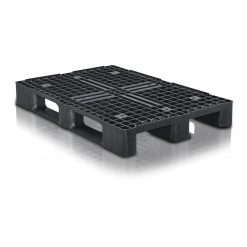
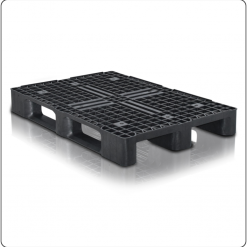
Plastic Pallet 1200×800 mm Euro Pallet with Three Runners for Transport, Storage and Logistics
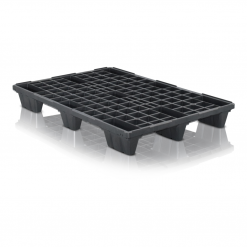
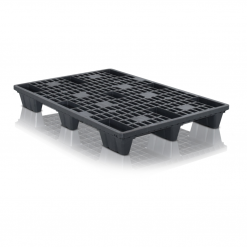
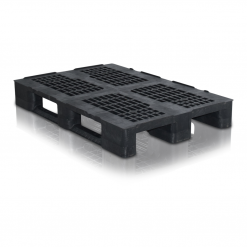
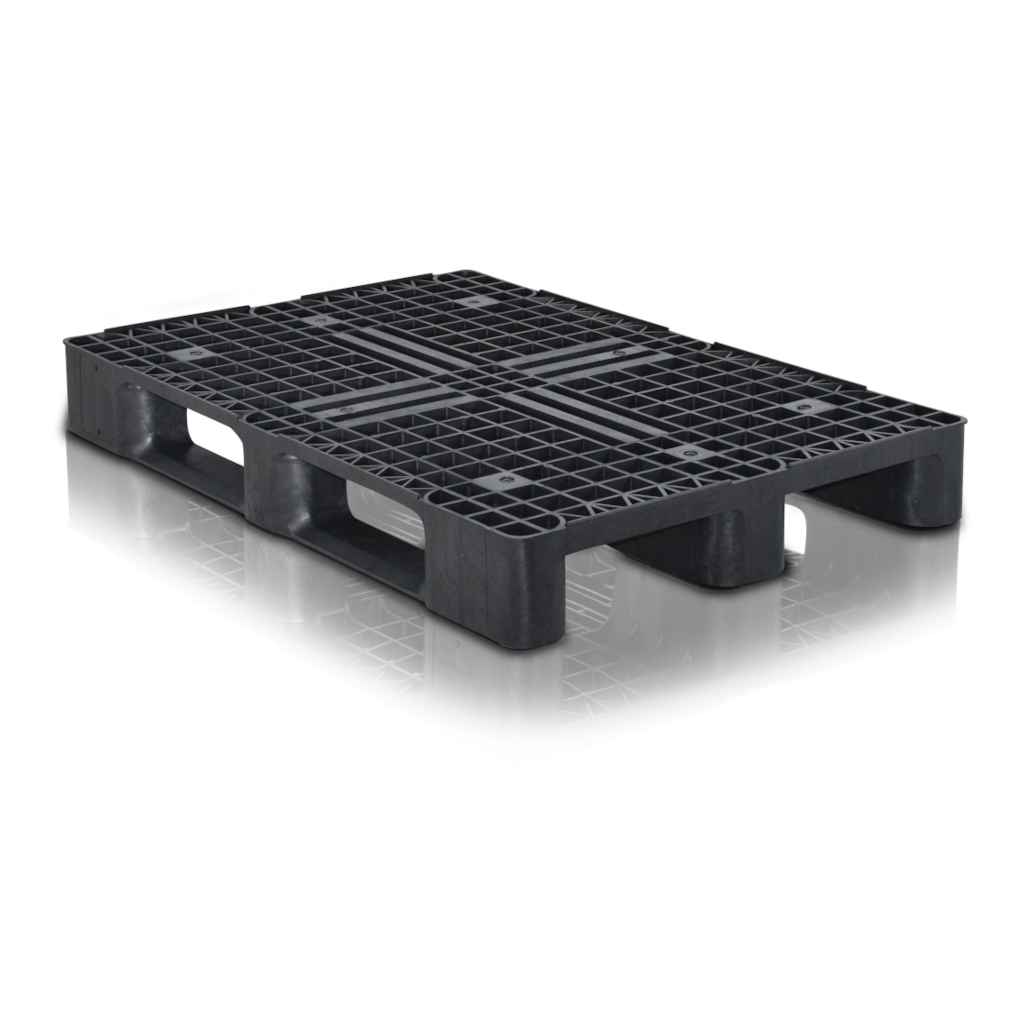
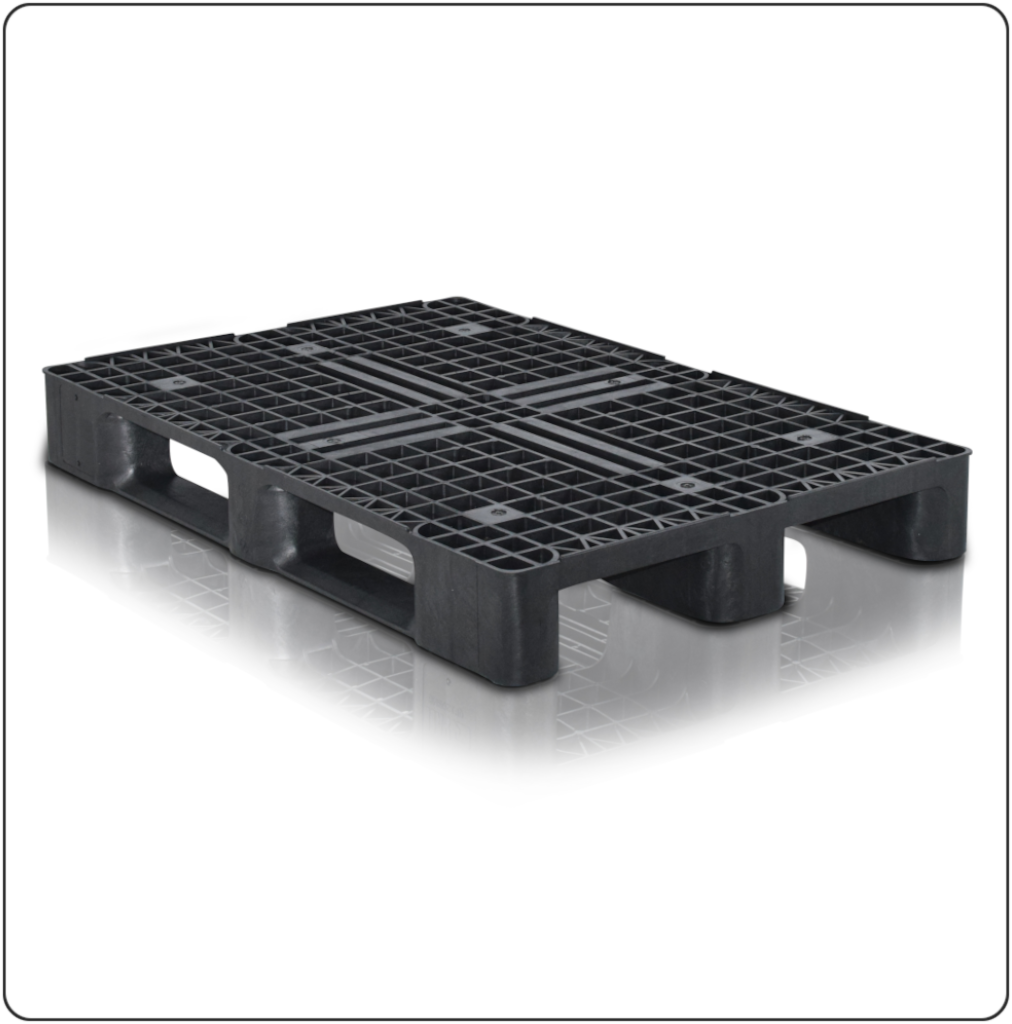
The 1200×800 mm plastic pallet 10361 is a lightweight and cost-effective Euro pallet for transport, storage, production and internal material flows. With a tare weight of just 11.4 kg, it combines easy handling with reliable load capacities for a wide range of standardised logistics processes. Three continuous runners provide a stable base and allow the pallet to be handled using suitable forklifts and pallet trucks.
The standard European format of 1200 x 800 mm makes the pallet easy to integrate into existing storage, shipping and packaging processes. It is particularly suitable for companies looking for a reusable plastic load carrier without requiring the higher load capacity or additional weight of a heavy-duty industrial or semi-hygienic pallet.
Its lightweight design makes the plastic pallet 10361 particularly suitable when empty pallets are regularly moved by hand, staged within a facility or carried over longer transport routes. When used in larger quantities, the lower pallet weight can reduce the overall transport weight and contribute to more efficient material flows.
Compared with conventional wooden pallets, the 10361 is splinter-free, moisture-resistant and free from loose nails or protruding metal parts. As it is made of plastic, the pallet itself does not require ISPM 15 treatment. This also makes it a practical alternative to a wooden Euro pallet for international transport and export processes.
Technical Data for the 1200×800 mm Plastic Pallet 10361
- Product: 1200×800 mm Plastic Pallet / Euro Pallet / Pallet with Runners
- Item No.: 10361
- Dimensions: 1200 x 800 x 145 mm
- Weight: 11.4 kg
- Static load capacity: 5,000 kg
- Dynamic load capacity: 1,250 kg
- Racking load capacity: 450 kg
- Base: 3 full-length runners
- Colour: black
- Material: Polyethylene (PE)
- Manufacturing: injection moulding
- Version: optionally available without a rim
- Forklift access: two-way entry with suitable forklifts and pallet trucks
- Typical applications: storage, production, shipping, retail, distribution and internal transport
The specified load capacities each apply to different load conditions and must therefore not be treated as equivalent. When selecting a suitable pallet, factors such as the total load weight, load distribution, potential point loads, storage duration, temperature, racking geometry and the material handling equipment used must also be taken into account.
Lightweight Plastic Euro Pallet for Standardised Material Flows
The 1200 x 800 mm format is one of the most commonly used pallet sizes in European storage and transport processes. This allows the plastic pallet 10361 to be integrated into many existing workflows, including goods receiving, picking, production supply, interim storage, shipping preparation and distribution.
The 10361 is positioned as a cost-effective standard pallet for applications that require a well-balanced combination of low tare weight, load-bearing capacity and reusability. It is lighter than many heavy-duty industrial pallets, making it particularly easy to handle. At the same time, its static load capacity of 5,000 kg and dynamic load capacity of 1,250 kg provide sufficient capacity for a wide range of typical unit loads.
The pallet is suitable for cartons, crates, containers, packaged components, packaged goods and other dimensionally stable products. It is essential that the load is distributed as evenly as possible across the deck and does not create excessive localised stresses. Narrow feet, heavy components with small contact areas or loads positioned on one side should be assessed separately.
The 10361 is not a heavy-duty or fully hygienic pallet. Its strength lies instead in efficiently supporting conventional transport and storage processes where low tare weight, reliable handling and cost-effective reuse are the main priorities.
What the Three Load Capacity Ratings of the Plastic Pallet 10361 Mean
Plastic pallets are generally specified with static, dynamic and racking load capacities. These values describe different operating conditions. A pallet can support a significantly higher load when stationary than during transport or when stored on two racking beams.
Static load capacity: 5,000 kg
The static load capacity applies when the plastic pallet is stationary on a sufficiently level, stable and load-bearing surface. Typical examples include block stacking, fixed staging areas and floor storage locations.
The plastic pallet 10361 has a static load capacity of 5,000 kg. This rating requires suitable and as even a load distribution as possible. The larger the contact area of the load, the more evenly the forces can be transferred into the pallet structure.
Point loads must be assessed separately. Heavy machinery components, metal parts with small feet or containers with narrow contact areas can create significantly higher localised stresses than an evenly distributed load of the same total weight. In such cases, additional load distribution plates or suitable layer pads may be required.
Dynamic load capacity: 1,250 kg
The dynamic load capacity describes the permissible load while the pallet is being moved using a suitable forklift, pallet truck or other appropriate material handling equipment. Additional forces occur during lifting, acceleration, braking, cornering and setting down that are not present when the pallet is stationary.
The dynamic load capacity of the 10361 is 1,250 kg. This makes the pallet suitable for a wide range of typical material flows in production, storage and shipping. This requires the load to be built up securely, distributed evenly and adequately secured for transport.
In addition to the pallet weight, travel speed, floor conditions, ramps, thresholds, the load’s centre of gravity and fork position also affect the actual stresses involved. The fork tines should be inserted as fully and evenly as possible beneath the pallet. Partial or off-centre handling can place additional strain on both the pallet and the load.
Racking load capacity: 450 kg
The racking load capacity is relevant when the pallet is used in pallet racking and supported on only two bearing lines. Unlike full-surface floor storage, the central section of the pallet is unsupported in this situation. As a result, greater deflection may occur under load.
The specified racking load capacity of the plastic pallet 10361 is 450 kg. This rating applies under suitable support conditions and with an evenly distributed load. For the specific racking application, factors including beam spacing, support depth, racking type, storage duration, temperature and the centre of gravity of the unit load must be taken into account.
For heavy long-term loads, automated high-bay warehouses or particularly wide beam spacings, a pallet with a higher racking load capacity may be more suitable. Actual suitability should therefore always be assessed based on the existing racking system and the complete unit load.
Benefits of the Low Tare Weight of 11.4 kg
With a tare weight of just 11.4 kg, the plastic pallet 10361 is one of the lighter pallets with runners in the Euro format. This makes empty pallets particularly easy to handle. Employees can move, stage or stack individual pallets more easily than significantly heavier industrial pallets.
The reduced weight is also relevant to transport processes. Every shipment carries not only the goods themselves, but also the weight of the load carrier. When large numbers of pallets are used at the same time, the weight difference compared with heavier pallet types can add up significantly.
For air freight, regular return transport or internal circulation, a lower pallet weight can therefore offer economic advantages. At the same time, the 10361 remains sufficiently stable for a wide range of standard applications thanks to its three-runner design.
However, a low tare weight does not replace application-specific pallet selection. For very high racking loads, heavy point loads or particularly demanding reusable processes, a heavier and more extensively reinforced pallet may be required. The 10361 is most cost-effective when its load capacity class matches the actual load weight.
Three Continuous Runners for Forklifts and Pallet Trucks
The base of the plastic pallet 10361 consists of three continuous runners. This design gives the pallet a stable foundation and supports an even transfer of forces between the deck, the load and the supporting surface.
The pallet can be handled from two sides using suitable forklifts and pallet trucks. Before use, the fork spacing, fork length, entry height and load capacity of the material handling equipment should be checked. Particularly when handling loaded pallets, the fork tines must be inserted sufficiently far and positioned as centrally as possible.
The continuous runners offer advantages for floor storage, block stacking and transport. They provide a defined support surface and reduce the number of individual point contacts with the floor compared with separate feet.
For automated conveyor systems, the standard format alone is not sufficient proof of compatibility. For roller conveyors, chain conveyors, pallet magazines or automated transfer stations, the runner position, deck geometry, entry height, deflection and sensor detection must also be checked.
Material and Manufacturing from Polyethylene
The plastic pallet 10361 is manufactured from polyethylene using an injection moulding process. During injection moulding, heated plastic is forced under pressure into a mould. This produces a reproducible geometry with defined dimensions, runners and reinforced areas.
Consistent dimensions are an important advantage in standardised material flows. While used wooden pallets may vary due to moisture, damaged boards or repairs, plastic pallets within the same product range retain a largely uniform shape.
Polyethylene is moisture-resistant and does not absorb water in the way wood typically does. The pallet does not swell when wet or gain weight through water absorption. This is particularly advantageous in outdoor areas, damp storage zones, sea freight or changing climatic conditions.
The material is resistant to many cleaning agents, oils and greases commonly encountered in industrial environments. However, its specific chemical resistance depends on the substance, concentration, temperature and duration of exposure. For critical chemicals or continuous contact with substances, suitability should be assessed on an individual basis.
The black version is designed for robust storage and transport processes and is UV-stabilised. UV stabilisation can improve resistance during temporary outdoor storage, but it does not prevent unlimited ageing under continuous exposure to sunlight. Service life always depends on the load, temperature, weather conditions and proper handling.
Advantages over Conventional Wooden Pallets
Plastic and wooden pallets perform the same basic function in many applications: they provide a load-bearing base for storage, transport and handling. However, the plastic pallet 10361 offers several advantages in terms of cleanliness, moisture resistance and consistent dimensions.
- splinter-free surface for safer handling
- no loose nails or protruding metal parts
- no water absorption or swelling as with wood
- weather- and moisture-resistant construction
- consistent dimensions and reproducible geometry
- comparatively low tare weight of 11.4 kg
- easier to clean than many rough or damaged wooden surfaces
- reusable in suitable circulation processes
- No ISPM 15 treatment is required for the plastic pallet.
- no material chips or wood abrasion in storage and production environments
Whether plastic or wood is more cost-effective depends on the specific process. For one-off short-distance transport, a simple wooden or single-use pallet may be sufficient. For recurring circulation, damp conditions, exports or clean production areas, a plastic pallet can offer long-term advantages.
Export Without ISPM 15 Treatment of the Plastic Pallet
For international transport, the treatment of packaging materials made from raw wood is an important consideration. The international standard ISPM 15 defines phytosanitary requirements for wood packaging material used in cross-border trade.
As the plastic pallet 10361 is not made of wood, the pallet itself does not require the corresponding heat treatment or fumigation. This can simplify export processes and avoid the risk of a pallet being rejected because a required wood treatment mark is missing or illegible.
The complete export packaging must nevertheless be suitable for the goods, the destination country and the mode of transport. If wooden crates, wooden frames or other components made from raw wood are also used, ISPM 15 requirements may still apply to those components.
In addition to regulatory considerations, plastic offers advantages in international transport where moisture and changing climatic conditions are involved. The pallet does not absorb water and therefore does not change its weight or dimensions in the way wood typically does.
Stackability, Storage and Return of Empty Pallets
Empty plastic pallets 10361 can be stacked on top of one another to save space. This makes stockholding in the warehouse easier and reduces the space required in buffer zones, shipping areas or when returning empty load carriers.
The low tare weight makes stacks of empty pallets easier to handle than comparable stacks of heavy industrial pallets. Nevertheless, the stacking height, floor levelness and operational safety requirements must be taken into account. High pallet stacks can become unstable if handled incorrectly or placed on uneven ground.
In reusable systems, pallets should be inspected regularly. Visible cracks, damaged runners, severe deformation or other defects can reduce the load-bearing capacity. Damaged pallets should therefore be removed from service and not reused without inspection.
In addition to stacking, a structured return logistics process includes labelling, cleaning, damage inspection, inventory management and timely staging. The reproducible format of the plastic pallet supports standardised processes.
Typical Applications of the Plastic Pallet 10361
Storage and Distribution
In warehouses and distribution centres, pallets are used for goods receiving, picking, interim storage and shipping. For these applications, the plastic pallet 10361 offers a standardised Euro format, a stable runner base and a low tare weight.
It is particularly suitable for evenly distributed cartons, sturdy crates, containers and packaged consumer or industrial goods. For racking applications, the racking load capacity of 450 kg must be taken into account.
Production and Internal Logistics
In production facilities, pallets are used to supply production lines, transport raw materials and packaging, and stage semi-finished and finished goods. Thanks to its low weight, the 10361 can be integrated easily into recurring internal material flows.
The splinter-free design can be particularly advantageous in clean production areas. Additional supports or layer pads may be useful for sensitive components or small packaging units.
Retail and Goods Staging
In wholesale, retail and distribution, goods often need to be staged, relocated or picked at short notice. The lightweight plastic pallet makes it easier to move empty load carriers and can be reused in standardised shipping processes.
Its moisture resistance also makes it suitable for areas with changing environmental conditions or where pallets are staged outdoors temporarily.
Automotive and Mechanical Engineering
In automotive and mechanical engineering processes, cartons, small load carriers, spare parts and packaged components are frequently moved. The 10361 can provide a cost-effective base for light to medium-weight unit loads.
For heavy metal parts, small contact areas or defined component supports, the load distribution must be assessed particularly carefully. Where necessary, plastic sheets, layer pads or custom-designed supports can help distribute the forces more evenly.
Export and Shipping Logistics
For international supply chains, the plastic pallet offers the advantage that it does not itself require ISPM 15 treatment for wood packaging material. Its low tare weight is also beneficial for modes of transport where every additional kilogram must be taken into account.
The 10361 can be used for road transport, air freight, sea freight and combined transport chains, provided that the load capacity, packaging and load securing measures are matched to the specific application.
Load Securing on the Plastic Pallet
The pallet forms the base of a unit load but does not replace professional load securing. The goods, packaging, centre of gravity, stacking height, friction values and transport conditions must be considered together.
Depending on the goods, stretch film, strapping, edge protection, lashing straps or anti-slip layer pads may be required. The load unit must be secured so that the goods cannot slide, tip or fall from the pallet during lifting, braking or cornering.
For smaller packaging units or goods with sensitive undersides, plastic layer pads and separator sheets can be used. They can increase the contact area, separate individual layers of goods and distribute forces more evenly.
For unit loads that require lateral containment, suitable 1200×800 mm plastic pallet collars can be considered. Compatibility with the pallet design, the goods and the planned stacking concept must be ensured before use.
Difference from the Semi-Hygienic Pallets 10367 and 10369
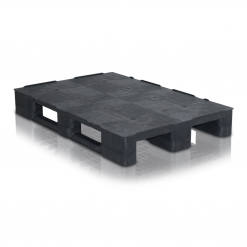
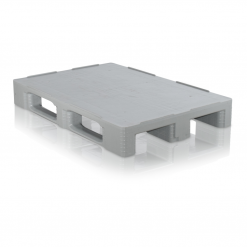
The plastic pallet 10361 is a lightweight standard pallet with runners for conventional transport, storage and production processes. The semi-hygienic pallets 10367 with an open deck and 10369 with a closed deck are heavier and designed for higher loads.
The 10361 offers a static load capacity of 5,000 kg, a dynamic load capacity of 1,250 kg and a racking load capacity of 450 kg. The 10367 and 10369 models each provide higher load capacity ratings and are therefore better suited to more demanding industrial applications or higher racking loads.
The key advantage of the 10361 is its lower tare weight of 11.4 kg. This makes it easier to handle and can reduce the overall transport weight, particularly when large quantities are used. Companies should therefore not automatically select the pallet with the highest load capacity, but rather the version that matches the actual load weight and process requirements.
The 10367 is suitable when a high load capacity, an open deck and a stacking rim are required. The 10369 additionally offers a closed support surface. By contrast, the 10361 is the more cost-effective choice for standard applications without extreme load or hygiene requirements.
When Is the Plastic Pallet 10361 the Right Choice?
The 10361 is particularly suitable when a lightweight, stable and reusable plastic pallet in Euro format is required. It is designed for applications where the load weight remains within the specified load capacities and no particularly high racking load capacity is needed.
Typical selection criteria include:
- low tare weight for easy handling
- standard 1200 x 800 mm format
- transport using a forklift or pallet truck
- static floor storage up to the specified load capacity
- light to medium-weight unit loads in racking
- recurring internal circulation processes
- export without ISPM 15 treatment of the pallet
- damp or changing environmental conditions
- alternative to conventional wooden pallets
For high point loads, very heavy goods stored in racking, automated high-bay warehouses or particularly demanding hygiene processes, it should be assessed whether a different pallet would be more suitable.
Important Information for Selection and Enquiries
To assess whether the plastic pallet 10361 is suitable for a specific process, the most precise possible information should be provided about the load and the intended application.
- type and dimensions of the load
- Total weight per pallet.
- Distribution of the load across the deck surface.
- potential point loads or small contact areas
- Static Storage, Dynamic Transport or Use in Pallet Racking
- racking type, beam spacing and storage duration
- Forklifts, pallet trucks or conveyor systems used.
- transport route and handling frequency
- requirements for export, cleaning or outdoor storage
- preferred version with or without a rim
- planned quantity and delivery date
Based on this information, it can be assessed whether the 10361 is adequately specified or whether a more heavy-duty semi-hygienic, industrial or custom pallet would be better suited to the application.
Frequently Asked Questions About the 1200×800 mm Plastic Pallet 10361
What Is the Plastic Pallet 10361 Suitable For?
The 10361 is suitable for storage, transport, production, goods staging, distribution and internal logistics. It is particularly attractive to companies looking for a lightweight plastic Euro pallet for standardised unit loads.
How Much Does the Pallet Weigh?
The plastic pallet 10361 weighs 11.4 kg. This makes it lighter than many heavy-duty industrial or semi-hygienic pallets and easy to handle when empty.
What Is the Pallet’s Static Load Capacity?
The static load capacity is 5,000 kg. This rating applies when the pallet is stored stationary on a suitable, level surface and requires the load to be distributed as evenly as possible.
What Is the Dynamic Load Capacity?
The dynamic load capacity is 1,250 kg. This rating is relevant when the pallet is moved using a suitable forklift or pallet truck.
Can the 10361 Be Used in Pallet Racking?
The pallet has a specified racking load capacity of 450 kg. Its suitability for a particular application also depends on the racking type, beam spacing, load distribution, temperature and storage duration.
Why Is the Racking Load Capacity Lower than the Static Load Capacity?
For floor storage, the pallet is supported across a large surface area. In racking, however, it often rests on only two beams and can deflect between the supports. This is why the permissible racking load capacity is lower.
Is the Plastic Pallet Suitable for Export?
Yes. As the pallet is made of plastic, it does not itself require ISPM 15 treatment for wood packaging material. However, the complete export packaging must still be suitable for the goods, mode of transport, destination country and applicable regulations.
Can the Pallet Be Moved Using a Pallet Truck?
Yes. The three runners allow two-way entry with suitable pallet trucks and forklifts. The dimensions and load capacity of the equipment must be appropriate for the unit load.
What material is the pallet made from?
The 10361 is manufactured from polyethylene using an injection moulding process. The material is moisture-resistant, robust and suitable for recurring storage and transport processes.
Does the Plastic Pallet Absorb Water?
No. Polyethylene does not absorb water in the way wood typically does. The pallet does not swell when exposed to moisture or gain weight through water absorption.
Can the Pallet Be Reused?
Yes. The 10361 is suitable for recurring transport and storage processes. Its actual service life depends on the load, handling, environmental conditions and regular damage inspections.
Is the Pallet Suitable for Food or Cleanroom Areas?
The 10361 is a standard plastic pallet rather than a specialised fully hygienic or cleanroom pallet. For particularly stringent hygiene requirements, a purpose-designed hygienic pallet should be considered.
What Is the Difference Compared with the Plastic Pallet 10367?
The 10361 is lighter and designed for conventional standard applications. The 10367 is a heavier semi-hygienic pallet with an open deck, stacking rim and significantly higher load capacity ratings.
What Is the Difference Compared with the Plastic Pallet 10369?
The 10369 has a closed deck and a higher load capacity class. It is suitable for applications that require a closed support surface, increased load-bearing capacity or improved cleanability.
Which Pallet Is More Cost-Effective?
For applications within its load capacity class, the 10361 is often the more cost-effective solution due to its low tare weight. Where higher racking or transport loads are required, a more robustly designed pallet may be more suitable in the long term.
Enquire Now About the 1200×800 mm Plastic Pallet 10361
Are you looking for a lightweight, cost-effective and reusable plastic pallet in the European standard format? The plastic pallet 10361 combines dimensions of 1200 x 800 mm with a tare weight of just 11.4 kg, three continuous runners and reliable load capacities for transport, storage and internal logistics.
Please send us information about the goods, weight, load distribution, racking use, transport route and required quantity. We will be happy to assess whether the 10361 is suitable for your application or whether another plastic pallet, a semi-hygienic pallet or a custom solution would be a better fit.
Request a quote now: info@plasticunion.com