

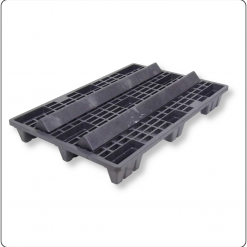
Plastic Pallet 1200×800 mm | Lightweight One-Way Pallet, Export Pallet and Nestable Pallet – 10016
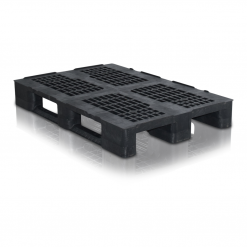
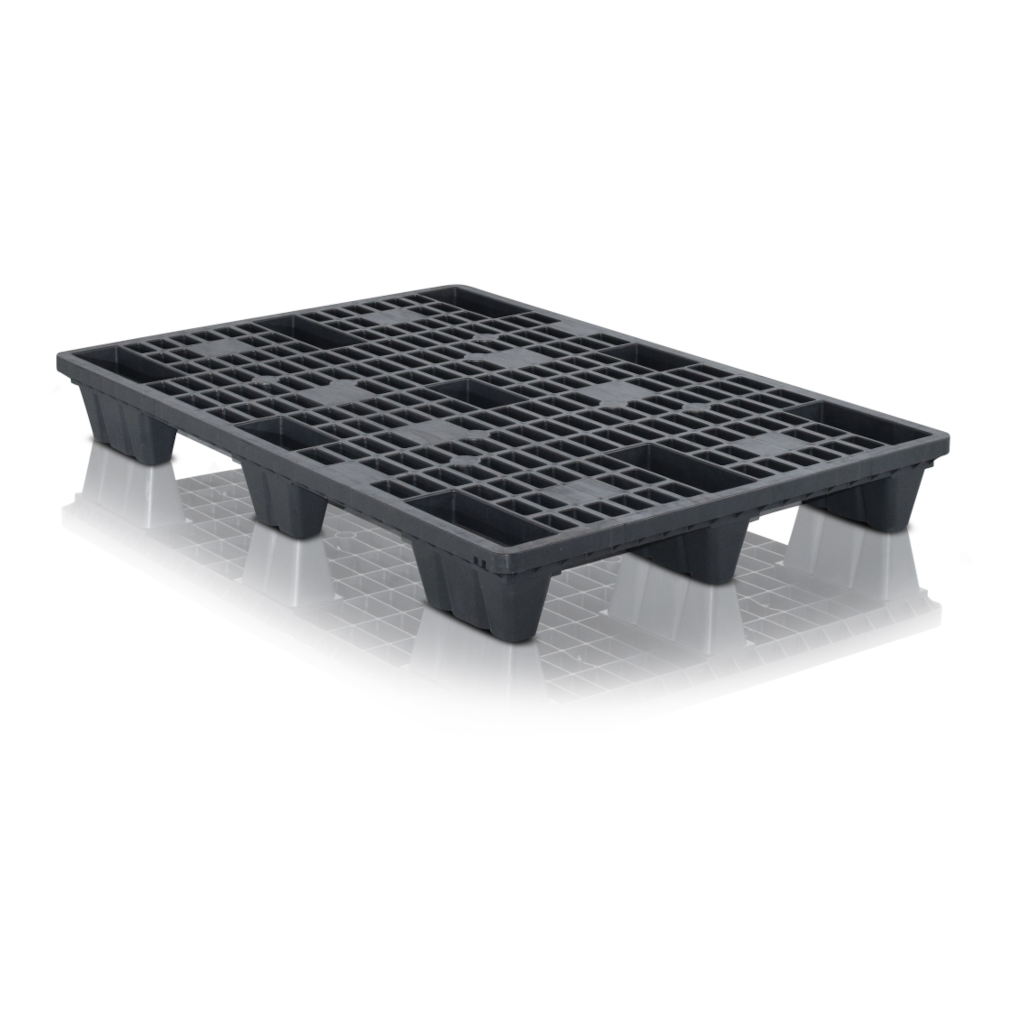
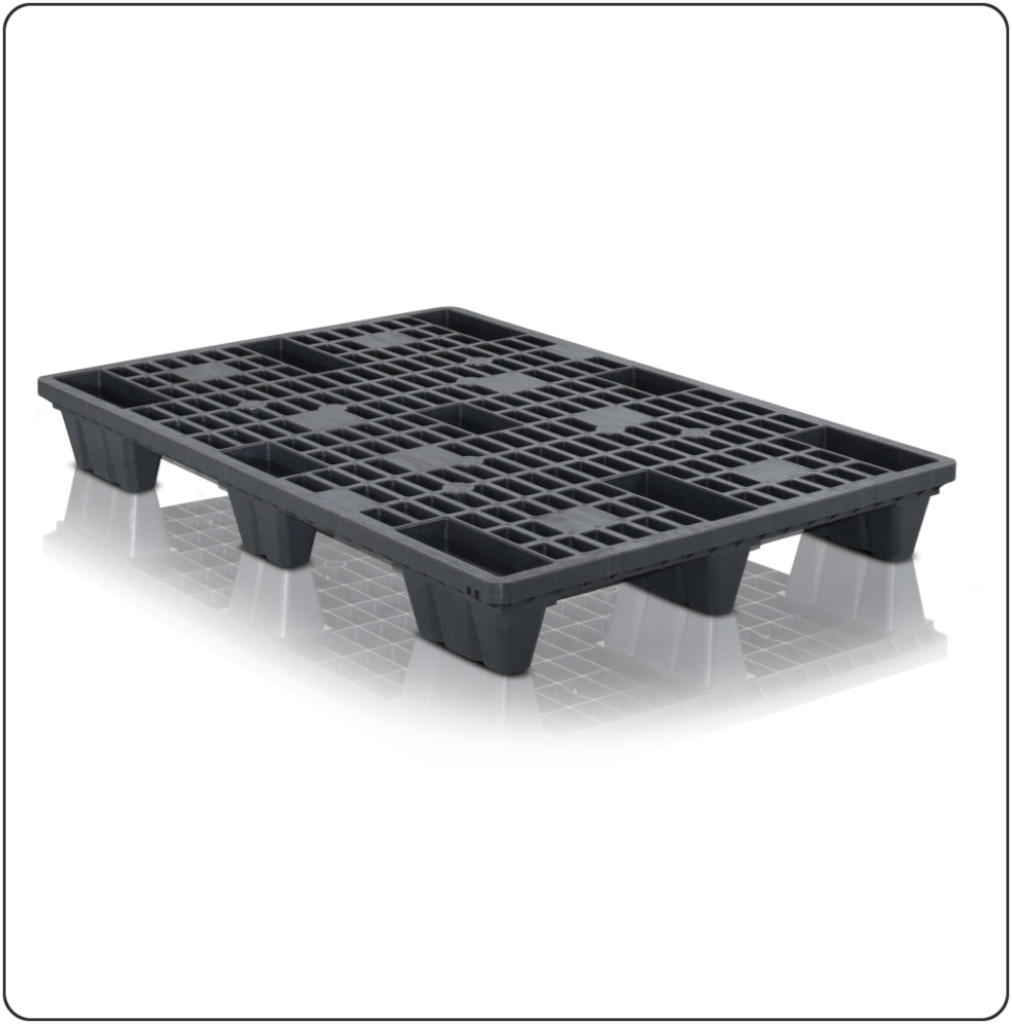
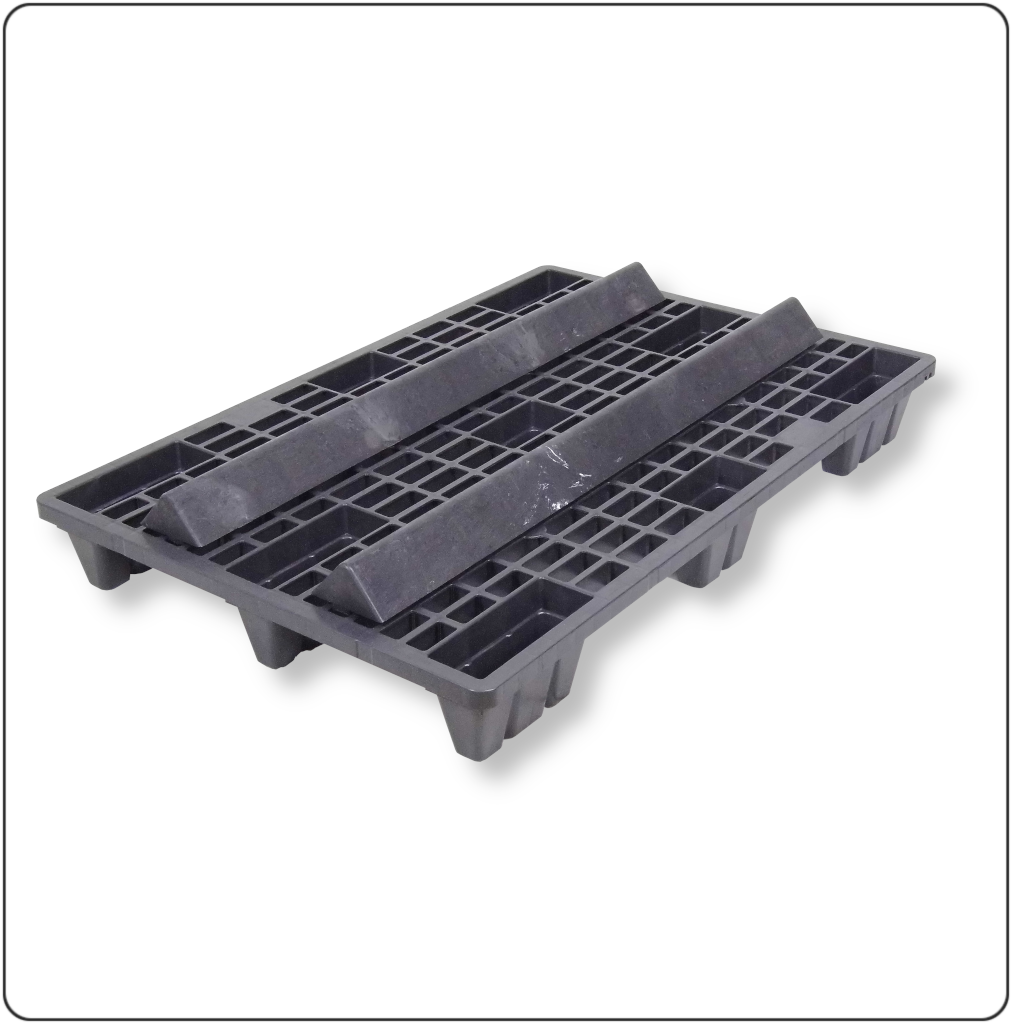
The Plastic Pallet 1200×800 mm | Lightweight One-Way Pallet is a lightweight export and one-way pallet in the European standard format. With a tare weight of 5.8 kg, a static load capacity of 2,500 kg and a dynamic load capacity of 1,200 kg, it is designed for companies seeking to reduce load carrier weight while providing a robust base for packaged goods. Typical applications include international supply chains, air and sea freight, road transport, distribution, project logistics and internal goods staging.
The nestable design is particularly economical when larger quantities of empty pallets need to be stored, transported to the packing area or returned after use. In the intended configuration, empty pallets can be nested inside one another to save space. This reduces the volume required compared with non-nestable load carriers. The 10016 combines this empty-pallet efficiency with the 1200 x 800 mm Euro format, making it suitable for many standardised packing and shipping processes.
Within the 1200 x 800 mm plastic pallet range, the 10016 is positioned as a lightweight solution with a higher dynamic load capacity than the even lighter 10015U model. It is not a designated racking pallet: the product page does not specify a racking load capacity for storage with the pallet freely supported on racking beams. The intended application should therefore always be determined based on the load weight, load distribution, transport route, material handling equipment, load securing concept and required number of reuse cycles.
Technical Data for Plastic Pallet 10016
- Product: Plastic Pallet 1200×800 mm | Lightweight One-Way Export Pallet – 10016
- Item-No.: 10016
- Dimensions: 1200 x 800 x 140 mm
- Weight: 5,8 kg
- Static load capacity: 2,500 kg
- Dynamic load capacity: 1,200 kg
- Racking load capacity: no racking load capacity specified
- Base: 3 runners
- Colour: black
- Material: Polyethylene (PE)
- Manufacturing: injection moulding
- Version: nestable, optionally available without a rim
Load capacity ratings apply only under suitable operating conditions. Point loads, uneven loading, high centres of gravity, temperature, storage duration, support conditions, the condition of the pallet and dynamic load peaks can affect the load-bearing capacity that can actually be used. For critical applications, the complete unit load must be technically assessed.
Positioning as a Lightweight One-Way and Export Pallet
The term one-way pallet primarily describes the logistics concept: the pallet is intended for shipping chains in which return handling cannot be reliably organised or would not be economically viable. It does not mean that the pallet must automatically be disposed of after a single movement. If it is undamaged, clean and suitable for the next application, reuse may be considered. However, no generally binding number of possible reuse cycles can be specified, as this depends on the goods being carried, handling frequency, transport routes, temperatures and handling conditions.
As a lightweight pallet, the 10016 reduces the proportion of packaging weight in the overall shipment. This is particularly relevant when freight costs are calculated according to actual weight, volumetric weight or a combination of weight and space. However, the low tare weight must not be considered in isolation: an inadequately specified pallet can lead to damaged unit loads, disruptions during handling or the need for additional securing measures. The 10016 is therefore particularly suitable when a maximum dynamic load of 1,200 kg is sufficient and no confirmed racking load capacity is required.
What Static and Dynamic Load Capacity Mean
Static load capacity: 2,500 kg
The static load capacity describes the load on a stationary pallet positioned on a sufficiently level, stable and load-bearing surface. Typical situations include floor storage, block stacking, goods staging or a stationary buffer area. The load should be distributed as evenly as possible across the deck surface. Narrow machine feet, metal edges, castors, containers with concentrated contact points or heavy components positioned on one side create local stresses that can be significantly higher than with a uniformly distributed load.
For these load patterns, suitable load distribution may be required. Depending on their design, reusable plastic layer pads and separator sheets can increase the contact area, separate individual layers of goods or protect sensitive packaging from the deck structure. However, a layer pad does not automatically increase the pallet’s load capacity; it must be appropriately dimensioned and secured against slipping.
Dynamic load capacity: 1,200 kg
The dynamic load capacity applies while the pallet is being moved using suitable material handling equipment. Additional forces are generated when lifting, accelerating, braking, cornering, crossing thresholds and setting the pallet down. This is why the dynamic load capacity is lower than the static load capacity. In practical selection, not only the 1,200 kg load weight but also the centre of gravity, stacking height, packaging stability, fork position, travel speed and condition of the transport route are decisive.
No Racking Load Capacity Specified
No racking load capacity is specified for the 10016. It should therefore not be approved for storage on two racking beams solely on the basis of its static or dynamic load capacity. In racking, the pallet spans freely between the supports; deflection and sustained loading differ fundamentally from full-surface floor storage. If the process requires high-bay or long-term storage, a pallet with a confirmed racking load capacity should be selected or the application should be expressly approved following a technical assessment.
Nestable Design and Benefits for Empty Pallet Handling
With nestable pallets, the undersides of empty load carriers partially fit inside one another. This creates a more compact empty pallet stack than with rigid pallets that can only be stacked on top of each other. This benefit applies in three areas: stockholding before packing, internal transport of empty pallets and potential return handling. Particularly when handling large quantities, the reduced space requirement can lower the amount of storage space, transport movements and empty pallet storage locations required.
For planning purposes, the actual nesting height, the number of pallets per stack, the permitted stacking height and the specific runner or empty-pallet configuration should be confirmed. High stacks of empty pallets must stand on a level surface and be protected against impact or tipping. Damaged pallets should not be included in a stable empty pallet stack and should be removed from service.
The Euro format facilitates integration into many existing packing stations. However, dimensions of 1200 x 800 mm alone do not guarantee compatibility with pallet magazines, roller conveyors, chain conveyors or automated transfer stations. Sensors, support surfaces, entry height and the geometry of the base must be compatible with the respective system.
Material, Manufacturing and Performance in Use
The Plastic Pallet 1200×800 mm | Lightweight One-Way Export Pallet is manufactured from polyethylene using an injection moulding process. This process enables reproducible contours and consistent basic geometry across the product range. Plastic does not splinter like damaged wood and contains no nails or protruding metal parts. The pallet does not absorb moisture in the same way as wood and therefore does not swell. This is a practical advantage in changing climatic conditions, sea freight and temporary outdoor staging.
The black version is described on the existing product page as UV-stabilised. UV stabilisation delays material ageing but does not replace proper storage. Prolonged exposure to sunlight, extreme temperatures, chemicals, repeated impacts and overloading can affect the service life. Before each reuse, the deck, feet or runners, edges and handling points should be inspected for cracks, deformation and other damage.
The chemical resistance of polyethylene depends on the specific substance, its concentration, temperature and exposure time. An application-specific assessment is therefore required for aggressive substances, hazardous materials or specialised cleaning chemicals. When liquid hazardous substances are involved, the pallet does not replace any required containment or hazardous-material storage solution.
Handling with Forklifts and Pallet Trucks
The dynamic load capacity of 1,200 kg applies to transport under suitable conditions. The fork tines should be inserted sufficiently far beneath the pallet, centrally and parallel to one another. Lifting from one side, using only partially inserted tines or striking the pallet with the fork tips can cause localised damage. Drivers must adjust their speed to the load height, centre of gravity, floor conditions and visibility.
Whether a particular pallet truck can be used depends on the entry height, roller position, fork length and specific feet configuration. A practical test using the actual material handling equipment is therefore recommended before approval for series use. The same applies to conveyor systems and pallet magazines. A lightweight pallet can be highly efficient, but is more sensitive to unsuitable support points and impact loads than a pallet designed for heavy-duty or high-bay racking applications.
Export Without ISPM 15 Treatment of the Plastic Pallet
ISPM 15 governs phytosanitary measures for certain wood packaging material used in international trade. The official IPPC information on ISPM 15 lists, among other items, wooden pallets, crates, dunnage, cable drums and reels made from relevant raw wood. A pallet made entirely of plastic is not subject to the prescribed treatment requirements for this wood packaging material. The plastic pallet itself therefore does not require ISPM 15 heat treatment, fumigation or the corresponding wood marking.
This does not constitute blanket export approval for every shipment. The goods, destination country, packaging, dangerous goods status, customs requirements and any additional components of the unit load remain decisive. If raw wood battens, wooden crates, dunnage or other wooden components are added, these must be assessed separately. Requirements imposed by customers, airlines, shipping companies or internal packaging guidelines may also go beyond ISPM 15.
For companies shipping internationally, the plastic pallet nevertheless eliminates a typical inspection step associated with wood packaging. This can simplify shipment preparation and avoid the risk of a wooden pallet being rejected because its marking is missing or illegible.
Weight Advantage and Economic Assessment
At 5.8 kg, the 10016 is significantly lighter than many robust reusable or wooden pallets. The economic benefit is best assessed using a shipment-specific calculation: multiply the weight difference compared with the existing load carrier by the number of pallets, then factor in the freight rate, space requirements, procurement costs and any return handling. For example, if a load carrier weighing 20 kg is replaced, the packaging weight is reduced by 14.2 kg per pallet. With 26 pallets, this would amount to approximately 369 kg. This example is not a general rule for loading road vehicles; it merely illustrates the effect of the weight difference.
In air freight, the weight saving can be particularly relevant. In sea freight and road transport, volume, container or vehicle utilisation and handling conditions also play a role. The nestable design can also make empty pallet handling more economical. However, a lightweight export pallet is not intended for every high point load, racking application or long-term reusable use. The most economical solution is therefore the pallet that safely meets the requirements of the actual process, rather than automatically the lightest model.
Load Securing: Considering the Pallet, Goods and Vehicle as a Complete System
A plastic pallet forms the base of a unit load but does not replace professional load securing. The packaging, centre of gravity, friction values, stacking height, form-fit securing, lashing equipment, vehicle body and transport route must be compatible with one another. BG Verkehr provides guidance on load distribution and load securing and points out that loads can slide, roll, tip or fall when direction or speed changes. It also covers form-fit securing, lashing equipment, anti-slip materials, wedges and other securing aids.
The VDI 2700 series of guidelines on load securing on road vehicles provides technical principles and application-specific guidance sheets. The relevant sheet depends on the vehicle, load and securing equipment. In connection with the legal requirements for load securing, the Federal Office for Logistics and Mobility, formerly the Federal Office for Goods Transport, refers to Section 22 of the German Road Traffic Regulations and further technical information. These sources do not replace a specific load securing calculation or an operational risk assessment.
Suitable Accessories for Different Unit Loads
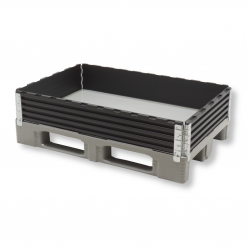
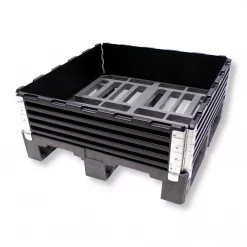
- Pallet collar: A Plastic Pallet Collar 1200×800 mm can provide lateral protection and a defined container height. Before combining it with the lightweight 10016, the support surface, rim geometry, total weight, stacking arrangement and dynamic loads must be assessed.
- Layer pads: Plastic separator sheets can separate layers of cartons, sacks, packaged goods or bottles, influence friction and distribute the load. The material thickness, surface and format must be matched to the goods and the load securing concept.
- Pallet wedges: For rolls, drums, barrels or cylindrical goods, plastic pallet wedges for load securing can help prevent rolling. Support wedges must be compatible with the deck geometry and incorporated into the overall securing concept based on form-fit securing, friction and lashing.
- Storage prisms: V-Blocks for pipes, shafts and round bars provide a defined V-shaped support. They are particularly suitable for elongated or round components, but must be secured against displacement and matched to the pallet with regard to point loads.
The optional pallet rim can help position suitable packaging but does not provide independent protection against slipping or tipping. Stretch film or strapping alone is not sufficient in every case either. The decisive factor is whether the complete unit load can withstand the forces expected along the respective transport route.
Industry Guide: Where and How Pallet 10016 Is Used
Export Logistics and Freight Forwarding
Freight forwarders, packaging service providers and export departments use lightweight plastic pallets for shipments in which the load carrier remains at the destination or return handling is uncertain. The 10016 is suitable for packaged industrial goods up to the confirmed dynamic load capacity. Its advantages include a low tare weight, standardised base dimensions and no requirement for ISPM 15 treatment of the plastic pallet itself. Before shipment, the destination country, handling method and load securing arrangements must be assessed.
Air Freight and Time-Critical Supply Chains
In air freight, spare parts logistics and express shipments, every kilogram of packaging weight can affect costs. Here, the pallet is used as a lightweight base load carrier for cartons, crates, containers or packaged assemblies. Airlines and air cargo handling companies may impose their own requirements regarding dimensions, overhang, securing and acceptance. The unit load should therefore be agreed with the service provider in advance.
Sea Freight and Container Logistics
In containers and international sea freight, the moisture resistance of plastic is advantageous. The pallet does not swell like wood and does not itself require ISPM 15 treatment for wood packaging material. However, it does not automatically protect the goods against condensation, corrosion or movement inside the container. Climate protection, stowage, void spaces and load securing remain integral parts of the packaging concept.
Mechanical Engineering and Industrial Supply
In mechanical engineering, the 10016 can be used for packaged spare parts, assemblies, plastic components, fittings or light to medium-weight components. For metal parts with small contact areas, the use of layer pads or load distribution plates should be assessed. Sharp-edged parts must not be placed unprotected on the deck. For heavy machine feet or long-term racking storage, a more robustly designed pallet is generally more suitable.
Automotive and Series Supply
Automotive suppliers can use the pallet for exported cartons, plastic containers, spare parts or supply flows without return handling. For recurring in-plant cycles, however, it should be assessed whether a robust reusable pallet would be more economical. Conveyor systems, small load carrier arrangement, scanners, label position and stacking pattern must be tested before series production begins.
Electrical Engineering, Electronics and Technical Equipment
For packaged electrical components, equipment and assemblies, the pallet provides a splinter-free base. Sensitive products also require suitable cushioning, moisture protection and, where applicable, ESD protection measures. Polyethylene does not automatically provide ESD suitability. Electronic goods should therefore only be shipped using a packaging system approved for this purpose.
Retail, E-Commerce and Fulfilment
Distribution centres can use the 10016 for consolidated carton shipments, promotional goods or cross-border deliveries. Nestable stacks of empty pallets save space in the shipping area. Key considerations include a level stacking pattern, sufficiently strong cartons, limited overhang and a load securing system that accounts for frequent handling within a hub-and-spoke network.
Food and Beverage Industry
The plastic pallet can be considered for packaged food, beverage cartons, cans, bottles in outer packaging or dry packaging materials. However, it is not a designated hygienic pallet, and the available product data does not provide blanket approval for direct contact with unpackaged food. Cleanability, material conformity and operational hygiene requirements must be assessed separately.
Chemicals, Cosmetics and Packaged Goods
For securely sealed, packaged products, the moisture-resistant pallet can provide a practical base for export. Chemical resistance and the risk of leakage must be assessed for the specific product. Additional regulations apply to hazardous substances; the pallet does not replace required containment systems, labelling or approved packaging.
Roll, Pipe and Long-Goods Logistics
Round goods must not be placed unsecured on a pallet. Suitable wedges or storage prisms can provide defined support for smaller rolls, shafts or pipe sections. The resulting point loads, the attachment of the securing aids and protection against rolling must be assessed. For heavy coils or large pipe bundles, a specially designed coil pallet or custom pallet is often the more suitable solution.
Difference from the Lighter 10015U Plastic Pallet
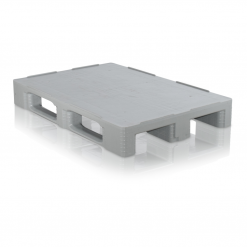
10015U plastic pallet
The decision should not be based solely on the maximum load weight. Actual load distribution, packaging type, handling frequency and the required safety margin are equally important. For racking storage or particularly intensive long-term use, a reusable or heavy-duty pallet specifically designed for that purpose should be selected.
Key Information for Quotation and Technical Assessment
For a reliable product selection, the enquiry should specify item 10016, the required quantity, delivery location, load weight, dimensions of the goods, centre of gravity, point loads, packaging type, means of transport, destination countries, forklifts or pallet trucks used, conveyor systems, required nesting or stacking height and any accessories needed. For rolls, drums or long goods, the diameter, length and required securing method are important. When using pallet collars, it must also be established whether the rim, support surface and total load are compatible.
FAQ for the 1200×800 mm Plastic Pallet 10016
What Is the Load Capacity of Plastic Pallet 10016?
The static load capacity is 2,500 kg and the dynamic load capacity is 1,200 kg. These ratings require suitable load distribution and operating conditions. No racking load capacity is specified.
Is the Pallet Suitable for Pallet Racking?
General suitability for racking has not been confirmed. As no racking load capacity is specified, the static load capacity must not be applied to storage on two racking beams. Racking use requires technical approval or a pallet with a specified racking load capacity.
What Does Nestable Mean?
Nestable means that empty pallets can be partially nested inside one another in the intended configuration. This reduces the height of the empty pallet stack. The actual nesting height and permitted number of pallets per stack should be confirmed for the ordered version.
Does the Plastic Pallet Require ISPM 15 Treatment?
No, the plastic pallet itself does not require ISPM 15 treatment for raw wood packaging material. If the complete packaging includes additional raw wood components, these must be assessed separately. Other export requirements may apply independently of this.
Can the Pallet Be Reused?
Reuse may be possible if the pallet is undamaged, clean and suitable for the next load. The term one-way pallet describes the intended logistics process and does not necessarily mean technically guaranteed single use. No fixed number of reuse cycles is specified.
Can the 10016 Be Moved with a Pallet Truck?
This depends on the specific pallet truck, entry height, roller position and runner configuration. Before series use, compatibility with the existing equipment should be tested in practice.
Is the Pallet Suitable for Air Freight?
Its low tare weight makes it particularly suitable for consideration in air freight shipments. Acceptance, however, depends on the unit load, dimensions, securing arrangements and the requirements of the respective air freight provider. Blanket airline approval is not included in the product data.
Can a Pallet Collar Be Used?
A 1200 x 800 mm pallet collar can generally be considered as an accessory. The support geometry, rim, total weight, stacking arrangement and dynamic loading are decisive. The combination must be approved for the specific process.
Is the Pallet Suitable for Rolls or Drums?
Round goods must be secured against rolling. Suitable pallet wedges or storage prisms can form part of the solution. Point loads, attachment and additional lashing must be taken into account.
Which Version Is Lighter: 10016 or 10015U?
The 10015U weighs 4.6 kg and is therefore 1.2 kg lighter. In return, the 10016 offers a dynamic load capacity of 1,200 kg, which is 200 kg higher. Both versions have a static load capacity of 2,500 kg.
General FAQ About Plastic Pallets and Their Benefits
What Is a Plastic Pallet?
A plastic pallet is a load carrier made of plastic that combines goods into a transportable unit load. Depending on the design, available types include lightweight export pallets, nestable pallets, reusable pallets, hygienic pallets, pallets with runners, racking pallets and heavy-duty pallets.
What Advantages Do Plastic Pallets Offer over Wooden Pallets?
Plastic pallets are splinter-free, contain no nails, do not absorb moisture like wood and have reproducible geometry. Many models are easy to clean and suitable for repeated-use processes. However, weight, load capacity, price and repairability vary depending on the model and application.
Are Plastic Pallets Always Lighter Than Wooden Pallets?
No. Lightweight export pallets can be significantly lighter, whereas robust reusable or hygienic pallets may weigh about the same as, or more than, some wooden pallets. Comparisons should be made between pallets in the same load capacity and application class.
Are Plastic Pallets Automatically Hygienic?
No. Plastic offers advantages in terms of moisture resistance and freedom from splinters, but the design determines cleanability and hygiene. Open-deck lightweight pallets, semi-hygienic pallets and fully enclosed hygienic pallets meet different requirements. A pallet alone does not replace a hygiene or HACCP concept.
Are Plastic Pallets Suitable for Food Products?
Many plastic pallets can be suitable for packaged food products. However, direct contact with unpackaged food requires product-specific material and conformity documentation. No general food-grade approval should be inferred solely from the term plastic pallet.
What Is the Difference Between Static, Dynamic and Racking Load Capacity?
Static load capacity applies when the pallet is stationary and adequately supported. Dynamic load capacity applies while the pallet is being moved using suitable material handling equipment. Racking load capacity applies under defined support conditions in racking. These ratings are not interchangeable and apply only under their respective specified conditions.
How Long Does a Plastic Pallet Last?
The service life depends on the design, material, load, temperature, UV exposure, chemicals, handling frequency and operating conditions. A general service-life estimate cannot be stated reliably. Regular visual inspections and the removal of damaged pallets from service are essential parts of safe pallet management.
Can Plastic Pallets Be Recycled?
Many plastic pallets can be recycled at the end of their service life, provided that the material, level of contamination and available regional recycling routes allow this. Any general claim of complete recyclability should only be made on the basis of specific material or take-back information.
Which Plastic Pallet Is Best for Export?
The appropriate export pallet depends on the load weight, point loads, mode of transport, destination country, required tare weight, return handling and load securing. Lightweight nestable pallets are attractive for shipments without return handling, while robust reusable pallets are often more economical for frequent reuse cycles.
What Information Is Required for Product Selection?
At a minimum, the weight of the goods, load distribution, packaging dimensions, means of transport, storage method, material handling equipment, temperature range, destination country and intended use as a one-way or reusable solution are required. Additional technical data is necessary for racking, conveyor systems or special goods.
Enquire About Plastic Pallet 10016
Do you need a lightweight 1200×800 mm plastic pallet for export, shipping or international logistics? Send your enquiry via the Plastic Union contact section, including the required quantity, load weight, application and any accessories needed. This allows us to assess whether the 10016 or another export, reusable or special-purpose pallet is better suited to your process.